
I used a 60mm scope as my main telescope for over 10 years before "moving up" to a 75mm reflector. During that time I learned how to get the most out of my telescope as my abilities advanced and I learned both more about the sky and more about using a telescope. My wife still owns a 60mm telescope, and though our household has many larger scopes, it still comes out to the front yard or back porch on occasion for casual observing sessions. It's light, easy to use, and enough telescope for many objects in the sky.
The thing that holds a lot of these smaller scopes back, especially at the low end of the price range, are poor mounts. But, if you can put your scope on target and get it to stay there, here are some of the sights you can expect to enjoy with your 60mm (2.4 inch) telescope.
In this article I'll be covering a brief list of what you can see with a 60mm telescope, which may be far more than you'd expect for such a modest aperture. There are a few objects that are downright magnificent, even with such a small scope. These are the brighter objects, where the mere 60mm of light collecting power is not a disadvantage. Most objects will have much more subtle detail, however, and will require more patience at the eyepiece to appreciate fully.
There are also objects that the challenge of observing them at all in such a small instrument is part of the fun. Collecting star clusters, globular clusters, or galaxies observed in a 60mm telescope can be a rewarding occupation all on its own. Plus, if you have the opportunity to use a larger telescope, you are already skilled at finding challenging objects, and can see your old friends with far greater detail.
Here are some of the things you can see with a 60mm telescope. Subsequent articles go into more detail about observing each of the different types of objects with your small scope. These objects are also good in larger telescopes that gather more light. They'll usually be easier to locate and will show more detail in larger scopes.
The Moon
Craters, mountains, seas, rifts, valleys, searching for colored areas on the Moon. The 60mm scope turns the Moon from a bright object in the sky into a world whose terrain you can explore.
The Sun
Use only a full-aperture filter over the front of the telescope. Never use one of the little eyepiece solar filters! You can observe sunspots, transits when they occur, and eclipses.
The Planets
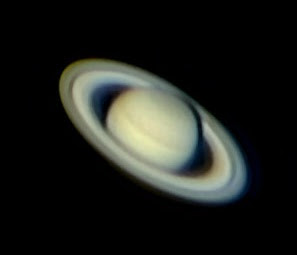
Mercury, Venus, Mars, Ceres, Jupiter, the Galilean Moons of Jupiter, Saturn and its rings, Titan and four other moons of Saturn (possibly as many as seven moons total under perfect conditions!), Uranus, Neptune. Jupiter and Saturn are two of the finest showpieces in the sky for the 60mm scope.
Other Solar System Objects
Typically about a dozen asteroids will be bright enough on any given year to be seen with a 60mm telescope. Also, usually two or three comets appear that can be seen, sometimes more.
The Stars
Stars are the forte of the 60mm telescope aside from the Moon, Jupiter, and Saturn. In particular, double and triple stars and the brighter, tighter star clusters. Mizar and Alcor in the Big Dipper make a good start for northern hemisphere observers, then zooming in on Mizar to see both Mizar and its companion, Mizar B. Just to the south of Alcor and Mizar lays double star Cor Caroli in the Hunting Dogs. Leo contains several nice double stars for observers in both hemispheres, and there are many, many more spread throughout the sky.
When observing individual stars and double stars you will be able to take your telescope to its highest practical magnification levels, about 150 to 200 powers if you have a good mount and either a clock drive or good slow motion controls on an equatorial mount. Otherwise, you will still get plenty of good observing at magnifications of about 50-100 powers. More on this is later articles.
Colored Stars
Most stars appear pretty well white. But some have a distinctive color. Herschel's Garnet Star in The Charioteer is a star that shows its color most strongly in small telescopes. In larger scopes the color begins to "wash out". It is a bright red in a small scope, becomes amber in a larger scope, and finally a watery yellow in the largest amateur telescopes. The double star Albireo in The Swan is a pair of stars of differing colors, each one setting off the color of the other, one yellow, one blue. The Red White and Blue triplet in The Swan is another close group where the color of each sets off the colors of the others. There are many nice colored stars in many constellations.
Star Clusters
When observing star clusters you will usually want to view with the lowest possible magnifications for your telescope to see as much of the sky at once as you possibly can. Many 60mm telescopes come with eyepieces that give far too much magnification for the aperture of the scope, but they don't come with eyepieces that allow the scope to work at the incredibly useful low levels of magnification they are capable of. Eyepieces of 35mm and 42mm and thereabouts make great "sky sweeping" eyepieces, and are the sort of thing you want for most "deep sky" objects.
There are many star clusters you can enjoy with the 60mm telescope. Some are too large to see all at once but can be "swept" to be enjoyed. There are two basic types of star cluster. The "open" cluster and the "globular" cluster. The globular cluster looks like a globe of stars. Open clusters vary from ones that look almost exactly like globulars to loose groups of stars that are near each other.
Here are some you can see in your 60mm:
Double Cluster in Perseus, M13 the Great Hercules Cluster, M103, M7, M6, M39, M22 the Arkenstone, M70, M54, NGC 6242, NGC 6281, M80, M4, M2, M5, NGC 6231, M45 The Seven Sisters, M11, M17, M62, M55, M28, M54, M69, M75, M26, NGC 6664, NGC 6712, NGC 6649, and many more. If that sounds like a lot of gobblety-gook, it's because I've mostly just given the "short" name of the cluster, which is a catalog number. Most of these are from the Messier catalog (the M numbers), a great list of objects to observe with a small telescope.
Deep Sky Objects
Star clusters are one type of "deep sky object", which is basically anything that isn't a solar system object or an individual star or star system (in the case of double, triple, and other multiple star systems.) You can see galaxies, nebulas (space clouds) and other things with your 60mm as well.
Galaxies:
M31, M110, M32, M33, M65, M66, M51, M101, M108, M109.
Planetary nebulas are roundish clouds of dust and gas thrown off by some stars:
M27 The Dumbbell Nebula, NGC 40, NGC 246, NGC 1535, NGC 2392 The Eskimo Nebula, NGC 3132, NGC 3242, NGC 6210, NGC 6543, NGC 6572, NGC 6826, NGC 7009 The Saturn Nebula, NGC 7662, M57 The Ring Nebula.
Other nebula don't have any particular type of shape:
North America Nebula, Pelican Nebula, The Great Orion Nebula, M8 The Lagoon Nebula, M20 The Trifid Nebula, Rho Ophiuschi, NGC 6334, and many more, particularly near the Milky Way.
Dark nebulas are dark clouds of gas and dust that are often outlined by bright objects behind them. There is a dark nebulosity about 2 degrees south of M62, Barnard 86 is a dark nebula in The Archer in the Milky Way. There are many others, in Orion and elsewhere, that you can see.
Star clouds are areas of our own galaxy that are especially rich in stars. They are too large to be seen all at once through the scope, but they make impressive areas of the sky to sweep through with the 60mm telescope. M11 The Scutum Star Cloud, in The Shield, is the largest and most impressive but sweeping along the length of the Milky Way at the lowest power possible will turn up many areas where your view will be filled with countless stars.
In future articles I'll give more details and tips on observing these different types of objects with the small telescope. If you've got a larger scope than 60mm, remember, you can see these objects, too, and in more detail.


 Posts
Posts


